Aerobic septic systems in Dayton, TX
Aerobic systems are all over the yards around here. We work on them, and we’re happy to explain how yours works so the next alarm doesn’t catch you off guard.
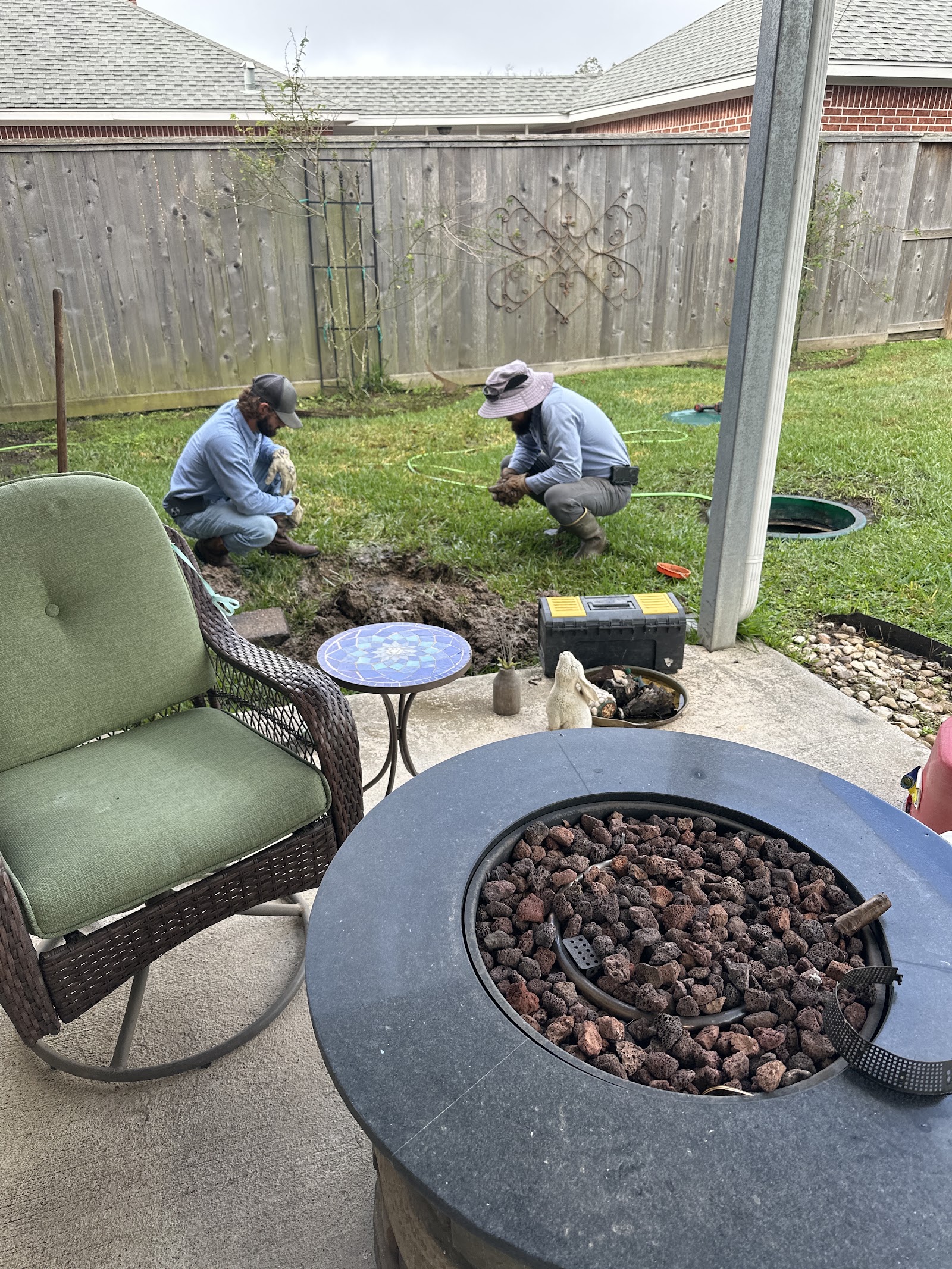
What an aerobic system is
An aerobic treatment unit (ATU) is a septic system with an air pump. That pump pushes oxygen into the treatment tank, and the oxygen-loving bacteria living there break waste down faster and more thoroughly than the bacteria in a conventional tank can.
The EPA describes aerobic units as systems that “use many of the same processes as a municipal sewage plant, but on a smaller scale.” Some add “a final treatment tank including disinfection” before the treated water goes back to the soil through spray heads or drip tubing.
Around Dayton, aerobic systems are extremely common because of the soil conditions: clay that drains poorly and groundwater that sits high. A conventional gravity drain field often just won’t cut it.
How it works, tank by tank
Most aerobic systems follow the same path. Knowing the parts makes it a lot easier to tell us what’s going on when something sounds or smells wrong.
1
Pretreatment (trash) tank
Everything from the house lands here first. Heavy solids and debris settle out before the water moves on.
2
Aerobic treatment chamber
The air pump (aerator) bubbles oxygen through this chamber so bacteria can digest the organic waste.
3
Clarifier
Things calm down here, and the last of the solids settle out of the treated water.
4
Pump tank and disinfection
Treated water is stored here and, on spray systems, passes a chlorinator before a pump sends it out.
5
Spray or drip dispersal
Spray heads or drip tubing spread the treated water over your yard, where the soil finishes the job.
6
Control panel and alarm
The box on the post runs the pump and aerator, reads the float switches, and sounds the alarm when something’s off.
Why aerobic systems make sense here
- Cleaner water back to the soil. The extra oxygen means more thorough treatment before anything leaves the tank.
- Works on tougher lots. Smaller lots and poorly draining clay or wet ground that can’t take a conventional drain field.
- Built-in warning. The control panel alarm tells you about a problem before you see it in the yard.
Signs of trouble
- The alarm is sounding or a red light is on at the control panel.
- Sewage odors around the tanks or the spray area.
- Soggy ground or standing water where the system disperses.
- A silent air pump. If you can’t hear or feel it running, treatment has stopped.
- Sprinklers spraying too much or at odd times.
More warning signs: 10 signs your septic system is failing.
Call (936) 258-3080Care basics
In the EPA’s words, “Regular life-time maintenance should be expected for ATUs.” Systems with pumps and mechanical parts “should be inspected more often, generally once a year,” and “a service contract is important.”
How our maintenance contracts workKeep the inspections going
A maintenance company checks the air pump, the control panel and alarm, the chlorine supply and the spray heads.
Use the right chlorine
Only the disinfectant your system is made for. Pool tablets are a no. The FAQ explains why.
Keep spray heads clear
Trim the grass and plants around the heads so the water can spread the way it should.
Watch what goes down
No wipes (even “flushable” ones), grease, cooking oil, paint or harsh cleaners.
When the alarm sounds, call
Silence it at the panel without cutting the power, ease up on water, and call your service company. An alarm is an early warning, not something to live with.
Common homeowner questions
How long do aerobic systems last?
With proper care, 20+ years. Neglect dramatically shortens that. The moving parts wear out sooner than the tanks do, which is why aerators and pumps get replaced along the way.
What causes aerobic system odors?
Usually a failed aerator, low or missing chlorine, too much sludge built up, or a system that’s overloaded. Odors should never be ignored.
Does an aerobic system ever need pumping?
Yes. Aerobic treatment breaks a lot down, but solids still collect in the tanks. When an inspection shows the sludge is getting high, it’s time. More on septic tank pumping.
Questions about inspections, permits or chlorine rules? Read the FAQ on our Services page, or dig into our guide on how aerobic septic systems work.
Let’s Talk Soon
You’re only one call away from talking to someone who knows septic systems. Rather write it down? Send us a message and we’ll reach out to you.